
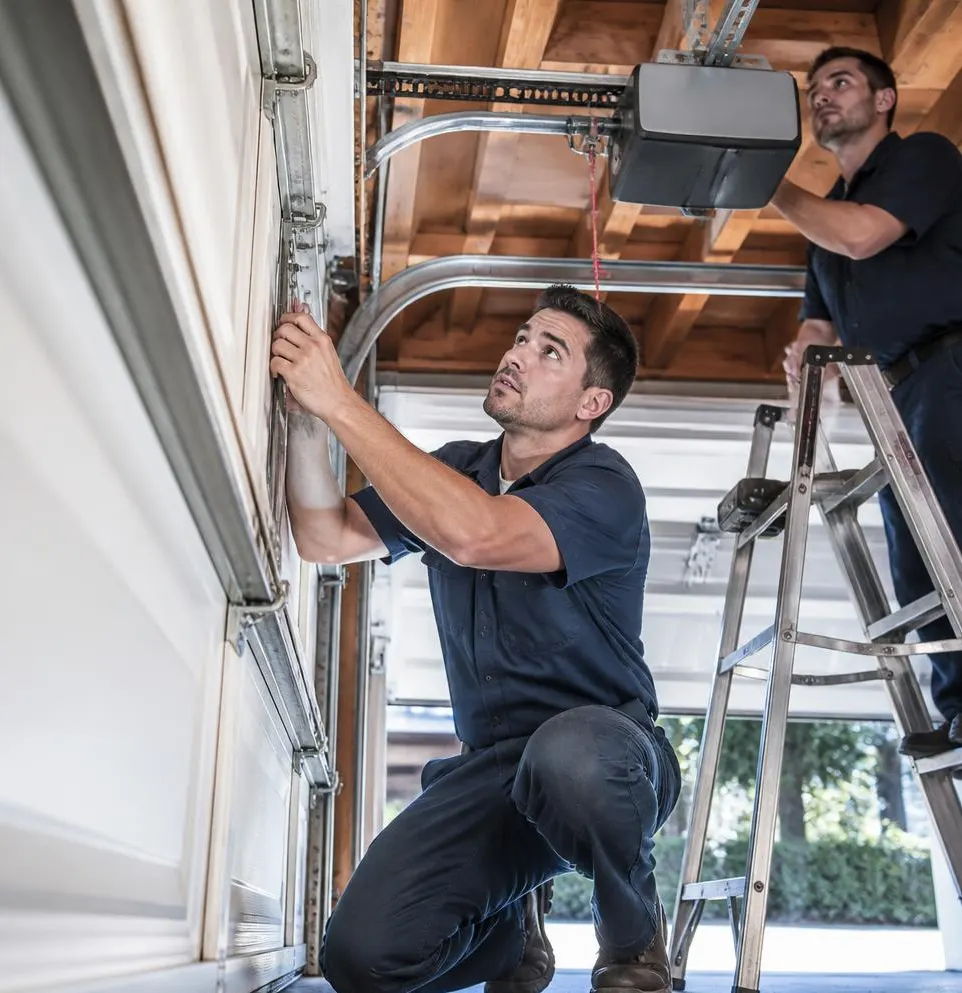
Rule of thumb: lubricate every moving metal part of your garage door twice a year with a light silicone or white lithium spray, and wipe off the excess before it has a chance to collect dust. The exceptions are the torsion springs, which need a careful, minimal touch, and the nylon rollers many newer doors use, which don't need oil at all and will just attract grit if you spray them anyway.
Bakersfield's dry stretches mean a lot of fine dust and occasional wildfire smoke residue settle into garage hardware. Any lubricant left sitting on the surface turns into a gummy film that grabs more dirt and actually makes hinges and rollers work harder, not easier. The goal isn't to coat everything heavily — it's to get lubricant into the joints and wipe the rest away.
What You'll Need
- White lithium grease spray or a silicone-based garage door lubricant
- Clean microfiber rags or shop towels
- A soft-bristle brush or old toothbrush for grimy spots
- A sturdy step ladder
- Safety glasses
- Mild soap and water for cleaning hardware before you lubricate
Step-by-Step: Lubricating Your Garage Door
- Close the door and disconnect the opener. Pull the manual release cord so you can move the door by hand without the motor engaging. This keeps you from working around a door that could suddenly move.
- Wipe down the tracks first. Dust, cobwebs, and dried mud build up fast here. Use a damp rag to clean the inside of both tracks, then dry them. Tracks should never be lubricated — a slick track actually causes rollers to slip and can throw the door off alignment.
- Inspect before you spray anything. Look for rust on hinges, flat spots on rollers, fraying near the cables, or gaps where a hinge has pulled loose from the panel. Lubricant won't fix any of these; it just masks the sound temporarily, so note anything that looks worn.
- Lubricate the hinges. Spray a small amount directly into the pivot point of each hinge along both sides of the door, working the door up and down a few inches by hand to help it soak in. Wipe off any drip before it reaches the painted panel surface.
- Lubricate metal rollers only. If your rollers are steel, spray the bearings at the center of each wheel, not the wheel surface itself. If they're nylon (the white or off-white rollers common on newer installs), skip lubrication entirely — oil breaks down the nylon over time and just picks up dust.
- Treat the torsion spring lightly. A thin coat of lithium spray along the coils helps prevent rust, especially heading into Bakersfield's winter rain. Don't overdo it, don't touch the spring while it's under tension doing anything other than spraying, and never attempt to adjust or remove it yourself.
- Lubricate the opener's chain or rail. A light coat of white lithium grease on a chain-drive opener, or the specific lubricant recommended for a belt or screw-drive unit, keeps the opener running quietly. Check your opener's manual, since belt-drive units often call for a different product than chain-drive ones.
- Finish with the lock mechanism and bearing plates, then run the door up and down a few times by hand before reconnecting the opener. Wipe away any excess lubricant that's pooled anywhere on the door.
Lubricants That Hold Up — and Ones That Don't
Not every lubricant in the garage is appropriate here, and the wrong choice causes more harm than good in a dusty, hot-summer climate.
- Use: white lithium grease spray or a silicone-based garage door lubricant — both resist washing out in winter rain and don't gum up in summer heat.
- Avoid WD-40 as a long-term lubricant. It's a solvent and light cleaner, not a lubricant. It evaporates within days and leaves a thin residue that actually attracts more dust, which is the opposite of what you want in a dry, dusty area.
- Avoid standard grease-gun grease or axle grease. It's too thick for garage door hardware, builds up quickly, and traps dirt and debris in a sticky layer that's hard to clean off.
- Avoid motor oil or household oils. They're too thin, drip onto the floor and door panels, and need reapplying constantly since they don't stay put.
What a Homeowner Can Handle vs. What Needs a Technician
Cleaning tracks, lubricating hinges and metal rollers, and oiling the opener chain are all reasonable DIY tasks with basic tools and a ladder. Where it's worth stopping is anything involving the torsion spring beyond a light surface spray, the lift cables, or the drums at the top of the tracks. These parts are under heavy tension, and adjusting or removing them without the right equipment is how serious injuries happen. If you notice a spring with visible gaps between the coils, a cable that's frayed or off its drum, or a door that's suddenly much heavier to lift by hand, that's a sign something beyond lubrication is going on.
When to Call Bakersfield Garage Door Service
If lubrication doesn't quiet things down, or you spot a stretched spring, worn cable, or a door that binds in the track no matter how clean it is, it's time to bring in a technician. Bakersfield Garage Door Service handles Spring Replacement and full Garage Door Maintenance visits that go beyond what's safe to do from a ladder — checking spring tension, inspecting cables and drums, and adjusting hardware so the door runs evenly on both sides.
If your garage door in Bakersfield, Oildale, Shafter, or anywhere nearby needs more than a fresh coat of lubricant, give Bakersfield Garage Door Service a call and we'll get it running smoothly before the rainy season puts it to the test.